
Latest News
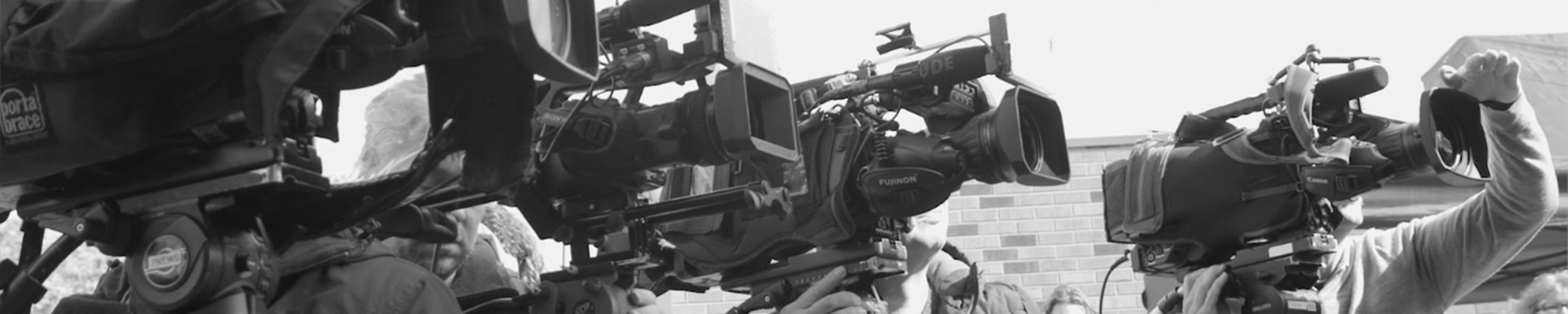
Speaking with authenticity on camera
Ever noticed how some good leaders do not come across as strong on camera?
People who are confident, articulate and persuasive in a room can suddenly seem uncomfortable or unconvincing the moment the camera is switched on. It is not a reflection of their capability. It is because speaking on camera is a different skill entirely.
Face-to-face, communication is quite dynamic. You are responding to people. You can read body language, adjust your tone and build energy in real time. On camera, all of that disappears! You are speaking to a lens, often with no immediate feedback. And that lens has a way of amplifying anything that’s slightly inauthentic. If something comes across as forced or insincere, it is far more noticeable.
In today’s corporate environment, expectations of leaders have shifted. Video is no longer optional. Leaders are expected to communicate internal updates, stakeholder messages, crisis responses and social platforms. It is now a core part of how organisations build trust and connection.
The challenge is that most leaders have never been trained to do video.
Here are a few principles that make a significant difference to video delivery.
Preparation: This shows on camera more than people realise. When you have taken the time to think through what you want to say, it allows you to be more natural in how you say it.
Ensure your key messages are clearly defined ahead of time: Aim for shorter sentences and stronger, more deliberate points. Scripts should always be in your own words, written in a way that feels comfortable when spoken out loud.
Read it out loud: Not everything that reads well on paper translates on screen. The only way to know is to test it. Read it out loud, refine it, and adjust where needed. This is far better to do before the camera starts rolling than in the moment.
Feeling comfortable in front of the camera: The most engaging speakers on camera feel natural and conversational. This does not mean being casual or unprepared. It means being at ease with the material and with the medium. When someone is focused on delivering the perfect line, it often has the opposite effect. It can feel rigid and rehearsed.
Credibility: This is where many people get it wrong. There is a tendency to equate credibility with perfection. In reality, credibility comes from authenticity. Small pauses, natural phrasing and even the occasional stumble can make someone feel more genuine. Over-polishing a message can strip that away and result in something that feels robotic.
This does not mean that scripting is unnecessary. In many cases, it is essential. But scripts for video need to be written differently. They should feel natural and conversational — more like something someone would say than something they would write. And importantly, they need to be read out loud, refined and adjusted until they feel natural to deliver.
The most effective on-camera communication feels far closer to a conversation than a performance.
As video continues to play a larger role in leadership communication, the ability to speak confidently and authentically on camera is becoming a core skill. The leaders who do this well are not necessarily the most polished. They are the ones who feel real.
In the end, it is not about achieving perfection. It is about being credible, clear and authentic in a format that demands all three.
Recent News
- Speaking with authenticity on camera
- CH4 Global tames SA Angus beef in another world first
- Senior retail executive Alex Palin joins the National Pharmacies team
- Adelaide Airport awarded Best Airport Staff in Australia & Pacific and Best Regional Airport by Skytrax
- Is your pet pooch ready for a big day out at Gluttony?
- Lutheran Homes Group continues Victorian expansion with major acquisition in Mildura
- CH4 Global wins global AgTech award for the third straight year
- Hutt St Centre’s impact report: more than $60m in crisis system expenditure prevented annually
- Yugo and VCARB to deliver an unforgettable experience for students during the Melbourne Grand Prix
- New route to international markets for SA citrus and table grape growers opens
- Blog: Thought leadership that cuts through
- $120 million parkline development opens its doors: New apartments driving 40-year high housing approvals in SA
- Work starts on $180 million, 254-home Senses residential development
- Blog: Take the time to strategise and plan ahead for 2026
- Detmold Group on track with 2025-2050 sustainability goals
- Moving from homelessness to homefulness: five policy areas for change
- CH4 Global scoops the pool with 2 international sustainability gongs
- Sports College SA to partner with Tjindu Foundation
- Indonesia AirAsia to fly daily between Adelaide and Bali
- Your Voice, Your Needs: National survey to improve medical and allied health care for Australians living with Parkinson’s
 We'd love to chat