
Latest News
Blog: Crafting credibility
28 February 2024
In the world of corporate design, image altering and Photoshop are part of the digital tool box that can help paint a brand's visual narrative. For graphic designers, enhancing images is an integral part of our craft. Our challenge lies not just in creating visually appealing content - but in understanding when to enhance and when to tread lightly, striking the balance between authenticity and aspiration. When done strategically, enhancements contribute to the brand’s ‘Halo Effect’, casting a radiant glow on a brand's credibility. However, the ethical waters become murky when image altering veers into deception. Misleading representations not only compromise authenticity but can also take the shine off the hard-won positive halo.
At its core, the Halo Effect is a psychological concept where the first visual impression, influence our perception of an entire person or a brand. The brand then exudes credibility, and consumers are more likely to respond positively to it, and to forgive shortcomings. From polishing visual elements to refining the overall aesthetic, our goal is to create a positive impression.
.png)
Image: https://sproutsschools.com
Striking a balance between enhancement and truth is paramount. Serious problems arise if a person’s image has been altered without consent, because of the highly personal nature of physical appearance.
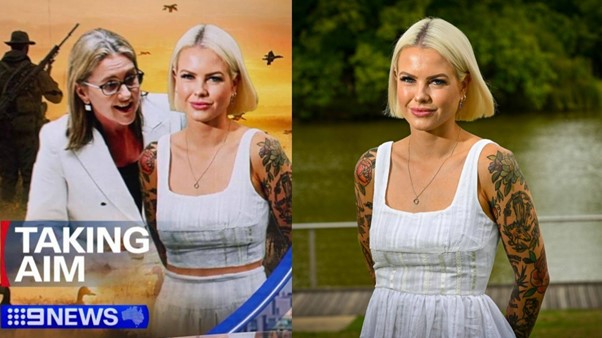
Channel Nine’s recent ‘AI’ edits to a graphic featuring Victorian Animal Justice Party MP Georgie Purcell is a great example. An altered image of her involved enlargement of her breasts, turning her dress into a crop top, as well as other micro tweaks to her appearance. This image then appeared as a title screen on the nightly news. While the blame was attributed to AI, it should be noted that a human should have, and most likely was behind the wheel, initiating, mediating, adjusting and approving the process.
Many clients want to be presented in the best possible light and achieve their own personal halo effect, which ultimately contributes to their businesses’ overall halo. People often pull me aside, and in a half-joking, half-serious way quietly say, ‘feel free to’…. hide this, or remove that or adjust my…. you name it! But what happens when you haven’t had direct contact with the person whose image you have loaded up into Photoshop?
My rule of thumb is, if something could have been changed recently, in real life, such as hair, lighting or clothing then it’s acceptable to adjust, using my best judgement as a professional designer. In almost all cases, this is what the person in the image would expect. Or, if the timing was out by a couple of weeks, which would have affected how some aspect of the image appeared, then it would be reasonable to adjust that. For example, an unfortunate blemish may have appeared in the past few days, so I would be happy to assist by photoshopping it away. On top of that, if the client requests any stronger alterations, I’m happy to oblige, as long as it’s puts their company in a favourable light and isn’t misleading.
Understanding the interconnectedness of graphic design, particularly image retouching and the Halo Effect, is essential. Every stroke of the digital brush should align with the brand's values, contributing positively to its perceived credibility. It's not just about visual appeal but also about building trust in the corporate arena.
As graphic designers in the corporate realm, our role extends beyond pixels and colour palettes. It's a delicate balance between enhancing visual appeal and preserving the authenticity that underpins a brand's credibility. It must contribute to the positive Halo Effect that elevates corporate visuals to a realm of trust and admiration.
Hughes | Graphic Designer
Recent News
- Kath Moore's artwork transforms Popeye into a journey through country
- From primary school putters to 80-year-old beginners: SA golf club named Australia's best
- Local Kitchen Co becomes SA's first ready-meal retailer to offer Support at Home and NDIS meals for in-store purchasing
- When someone says they’re not OK, would you know what to do?
- First day of school for newest Facility Dog Westy
- Internal communications: the overlooked key to attracting and retaining talent
- Artists step up in support of people experiencing homelessness
- Australian and Korean business leaders meet to discuss partnerships in space, resources and AI
- Cardiac breakthrough offers potentially life-saving treatment for more patients
- On your paws... go! Let's walk with purpose at the last ever PAWGUST
- Breaking Bad (News)
- More choice and more capacity for Adelaide travellers as Singapore Airlines goes 12 times weekly
- International students hit country roads on jobs drive
- Detpak opens US manufacturing facility in Spartanburg, South Carolina
- Yugo Perth University Campus Student Accommodation Building Opens in Waterford
- Blog: Broadcasting vs. Narrowcasting: Why Modern PR Needs Both
- Walk with purpose at our last ever PAWGUST!
- New CFO and expanded Board under Unity Housing merger
- China Eastern arrival links Adelaide and Shanghai for the first time
- Parkinson’s Australia continues campaign against herbicide banned in 70 countries
 We'd love to chat